The research in our group focuses on the application and development of theoretical and computational methods to gain an in-depth understanding of subcellular processes. Many interactions in cell signaling pathways are mediated by intricate networks of interacting biomolecules. Deregulation of these pathways could trigger cellular transformation, oncogenesis, and a host of other diseases. The research in our lab seeks to decipher the underlying principles, such as allostery, governing cell signaling mechanisms at the atomic level. In these endeavors, we use simulation based approaches, and related statistical mechanics, classical and quantum mechanical methods, as a complementary tool to experiments.
Recent Selected Publications
Lee E., Tran N., Redzic J. S., Singh H., Alamillo L., Holyoak T., Hamelberg D., Eisenmesser E. Z., (2025). Identifying and controlling inactive and active conformations of a serine protease. Science Advances, 11, 1-9
Yao X-Q., Hamelberg D., (2024). Dissecting the Allosteric Fine-Tuning of Enzyme Catalysis. Journal of the American Chemical Society Au, 4, 837–846
Souffrant M. G., Yao X-Q., Hamelberg D., (2023). Evolving Mutational Buildup in HIV-1 Protease Shifts Conformational Dynamics to Gain Drug Resistance. Journal of Chemical Information and Modeling, 12, 3892–3902
Ahmed F., Yao X-Q., Hamelberg D., (2023). Conserved Conformational Dynamics Reveal a Key Dynamic Residue in the Gatekeeper Loop of Human Cyclophilins. Journal of Physical Chemistry B, 127, 3139–3150
Kumutima J., Yao X-Q., Hamelberg D., (2022). Post-translational Modifications of Cyclophilin D Fine-Tune Its Conformational Dynamics and Activity: Implications for Its Mitochondrial Function. Journal of Physical Chemistry B, 51, 10844–10853
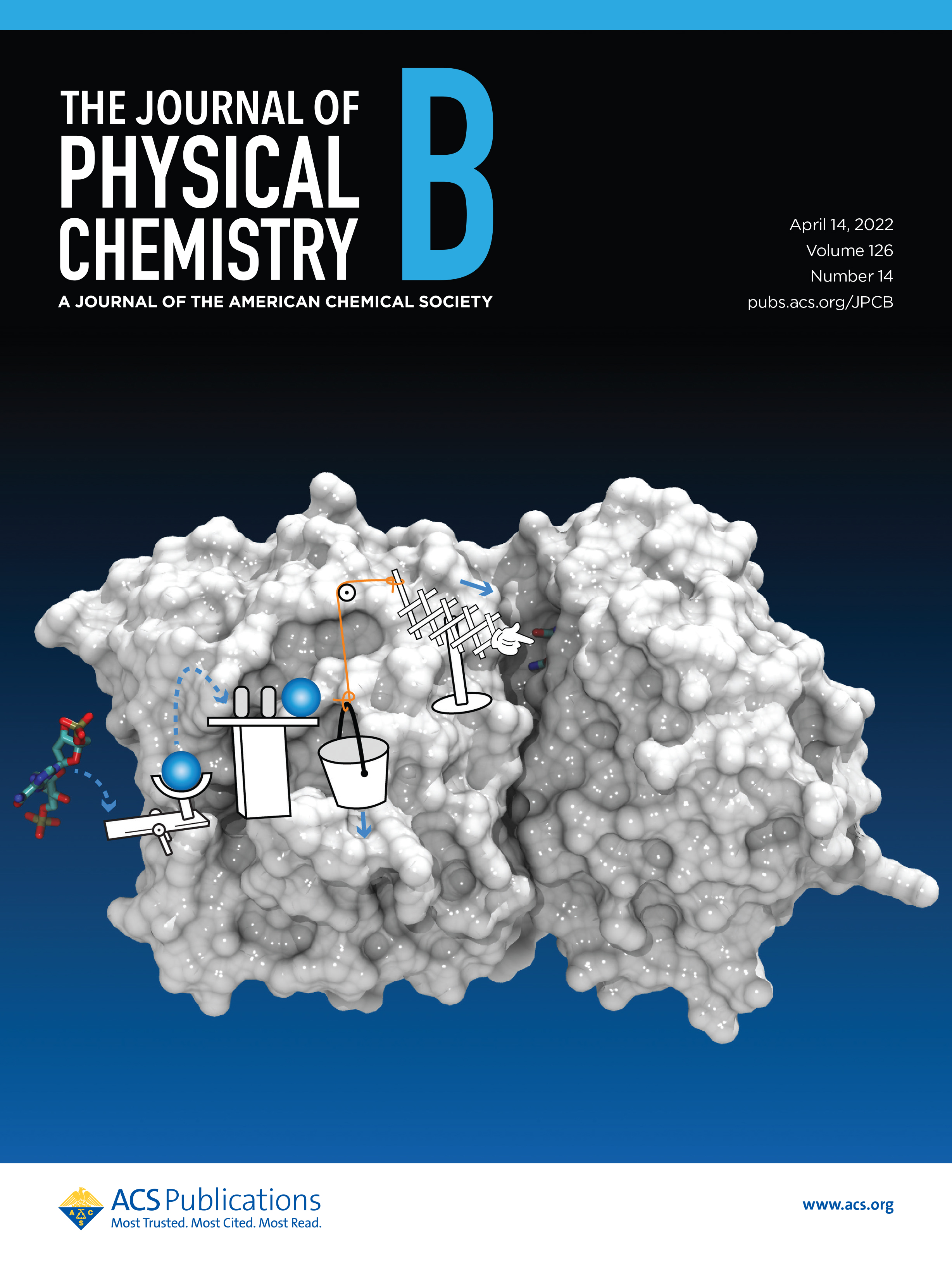
Yao X-Q., Hamelberg D., (2022). From Distinct to Differential Conformational Dynamics to Map Allosteric Communication Pathways in Proteins. Journal of Physical Chemistry B, 126, 2612–2620(Cover Issue)